When fear forces a person into silence, makes them shut down their social media accounts, or prevents them from participating, digital violence ceases to be an individual problem and becomes a democratic one. Feminist, migrant, and LGBTIQANB+ organizations are seeking ways to confront hate without abandoning the internet: by occupying it, challenging it, and building the online world they want to inhabit.
By Sofía López. Edited by Amanda Marton | Abismo Magazine
She was from Colombia and had never understood the LGBTIQANB+ movement. She had grown up in a conservative environment and did not even understand what the acronym meant. She may have heard, once or twice, about a distant relative who might have been part of a sexual or gender minority. At 50, she was neither surprised nor outraged when she came across offensive comments on social media targeting the community.
That changed when she took part in an in-person roundtable discussion.
At the gathering, she decided to share her experience as an agricultural day laborer on the Chilean-Peruvian border, in the city of Arica. In turn, she heard the story of a young trans man and everything he had been through. With tears in her eyes, she recognized experiences similar to her own: stereotypes, struggle, hard work, survival.
Sometimes, in order to understand a form of violence that seems distant from us, we must first recognize our own experience of vulnerability. That was one of the lessons Nairbis Sibrian, a member of the Chilean Association of Communication Researchers, took away from that conversation. “Recognizing themselves as people shaped and made vulnerable by social structures allowed them to empathize, connect, recognize themselves in others, and understand forms of violence they otherwise would not have understood,” she says.
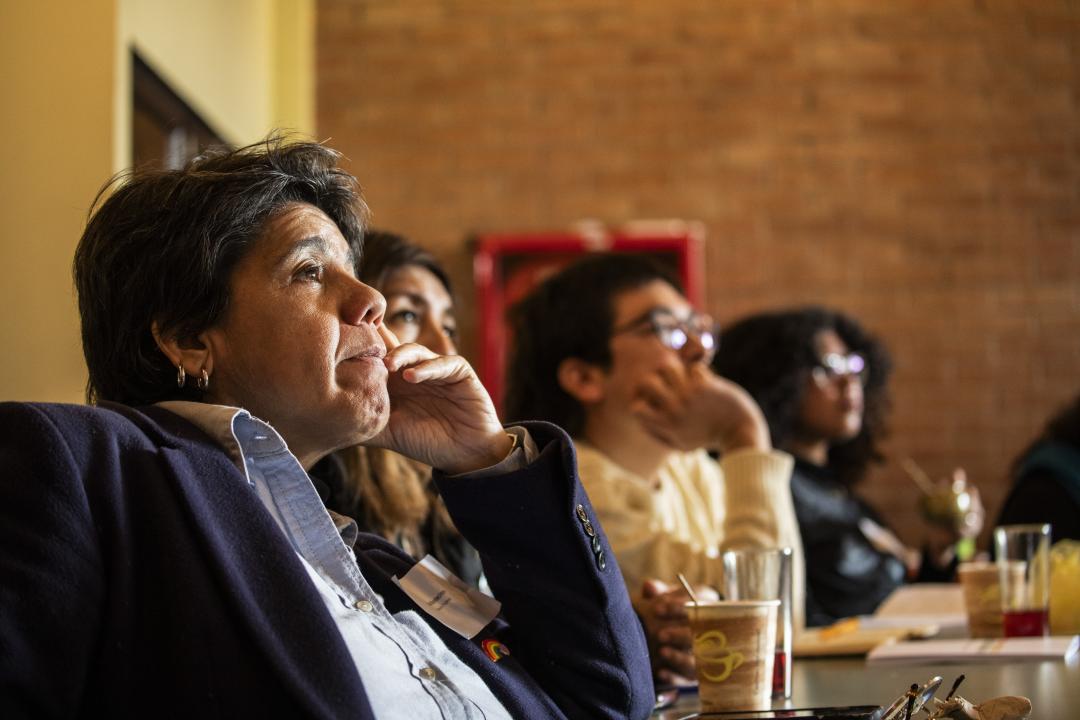
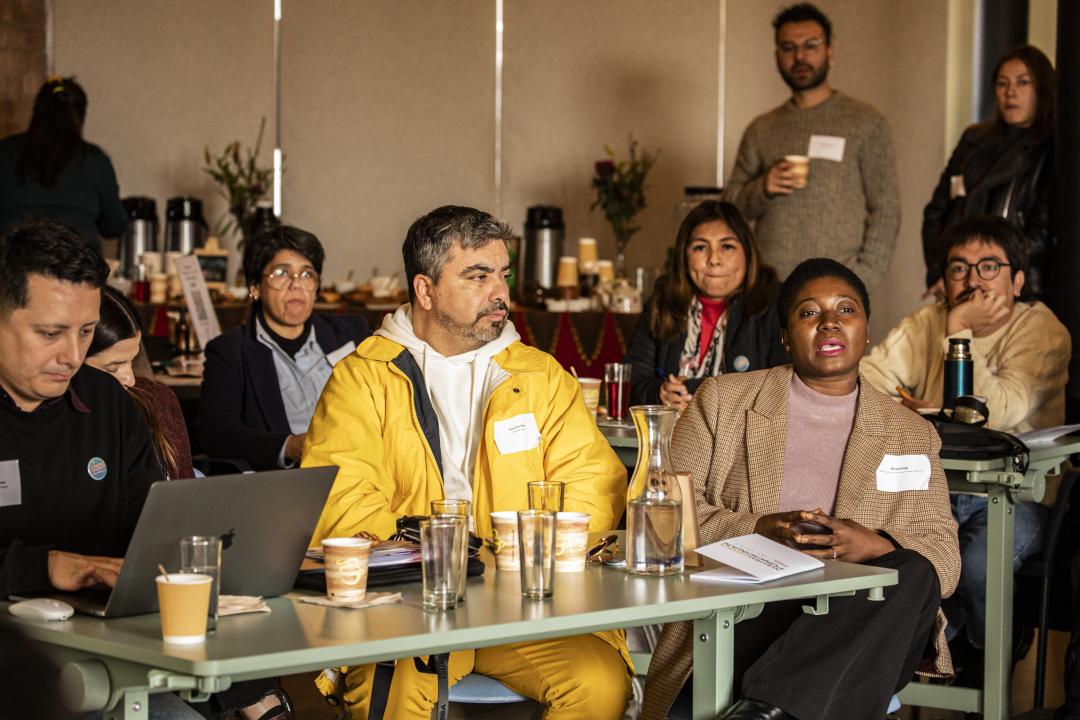
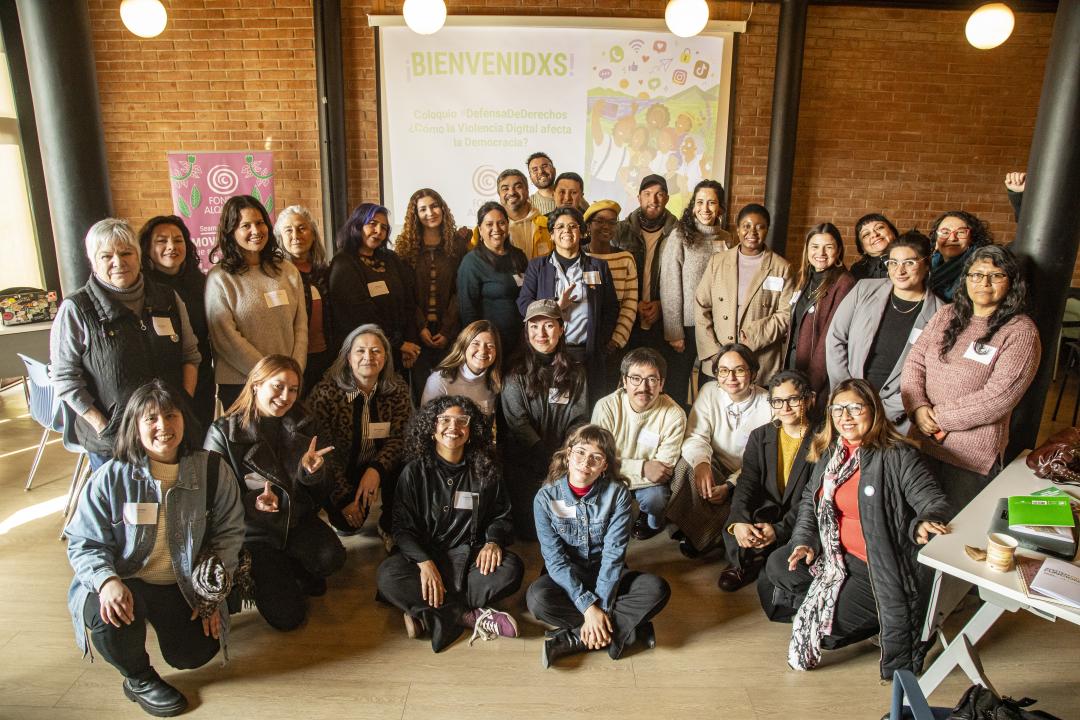
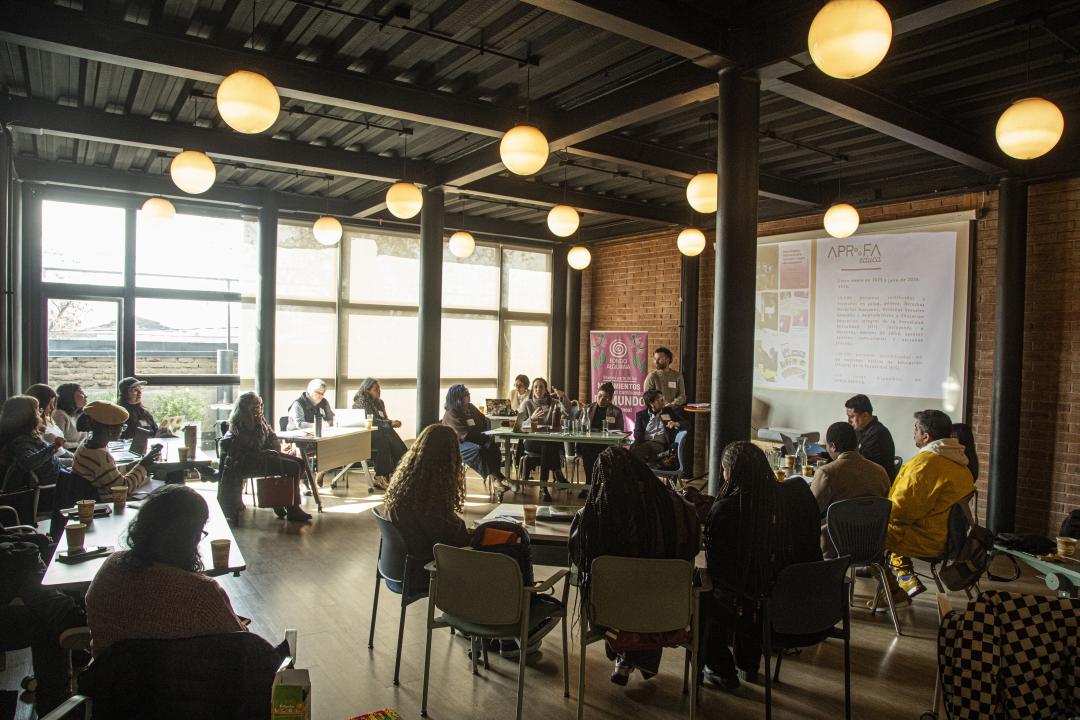
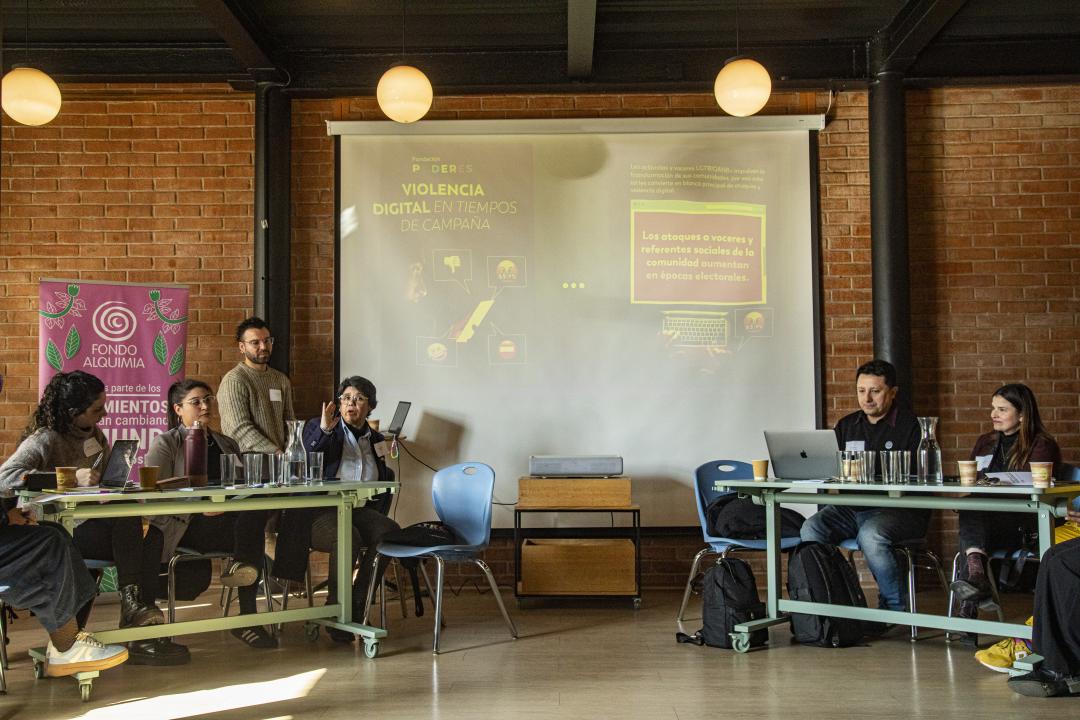
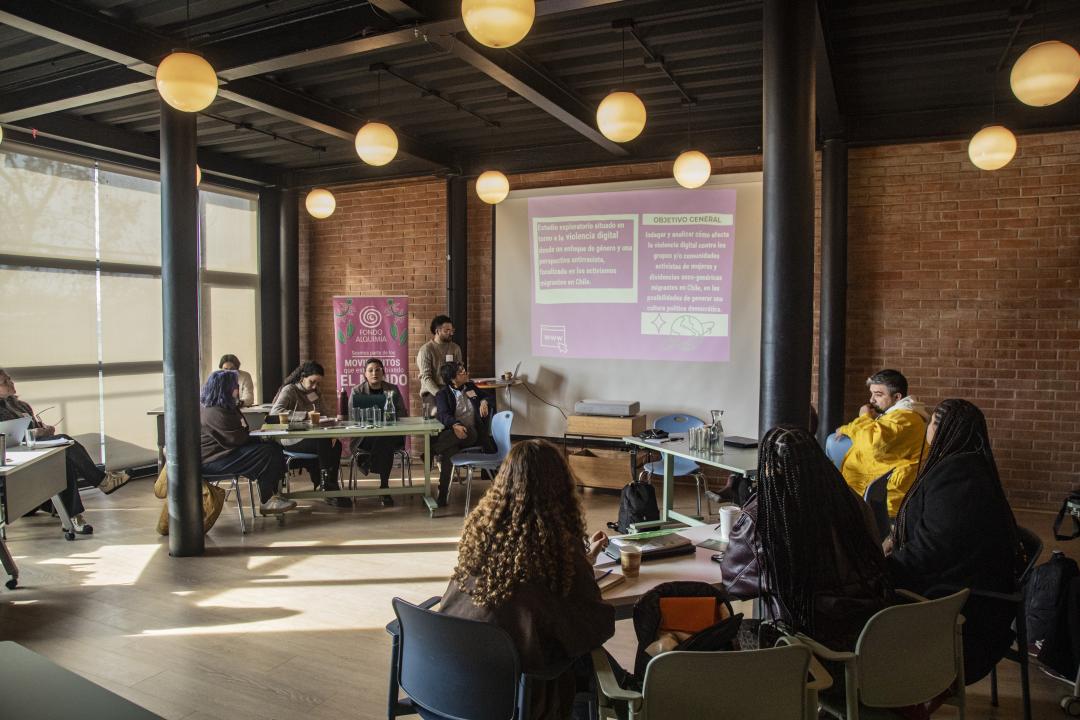
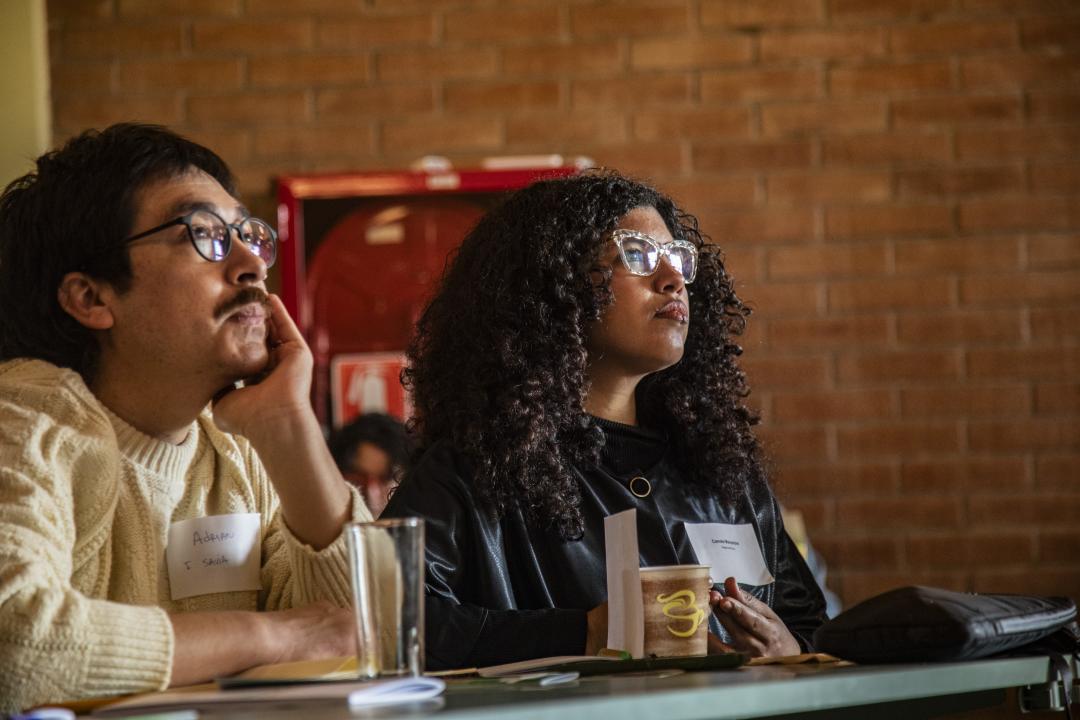
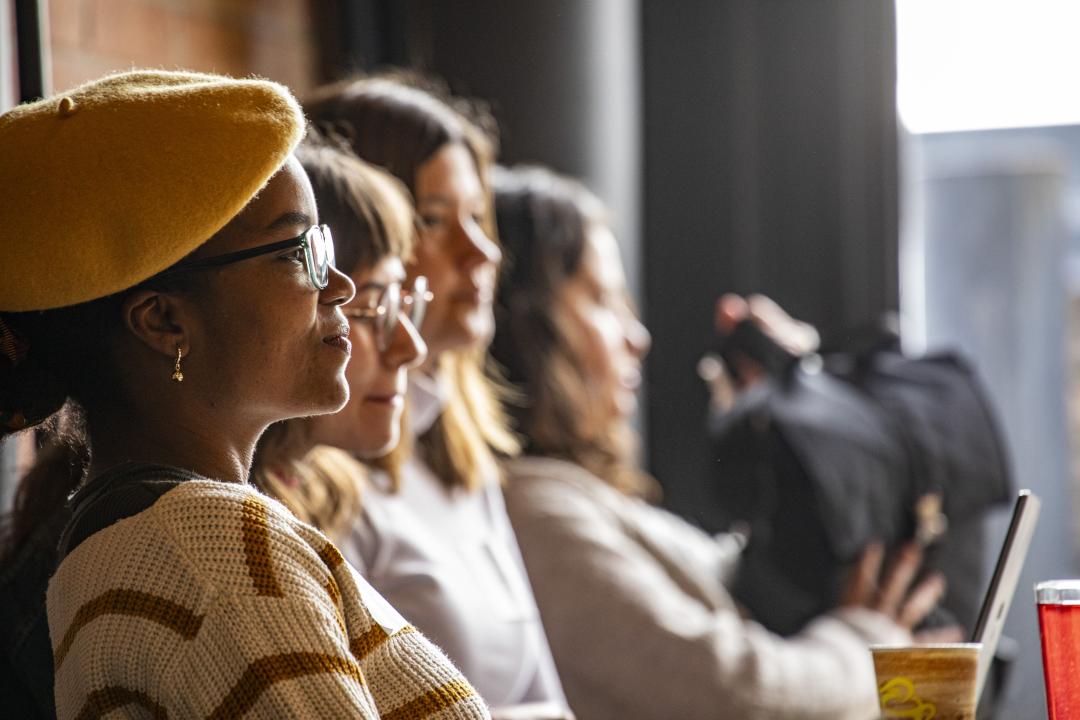
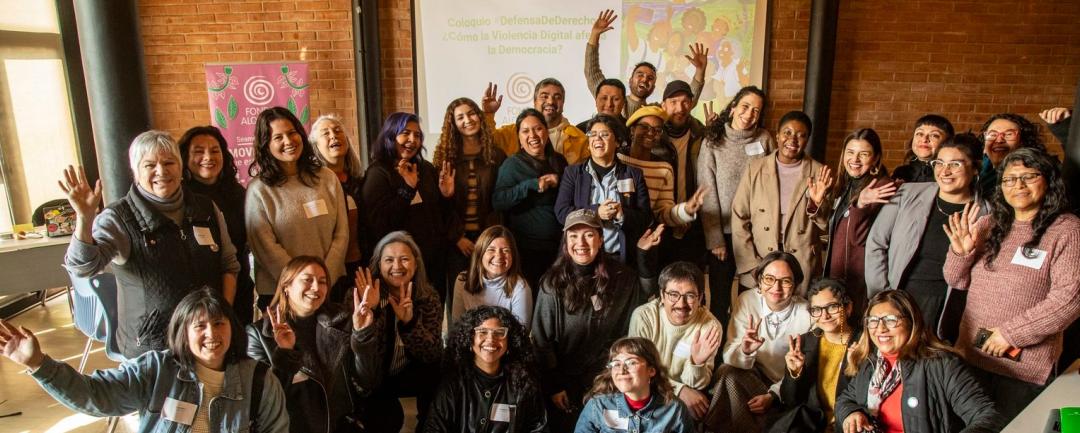
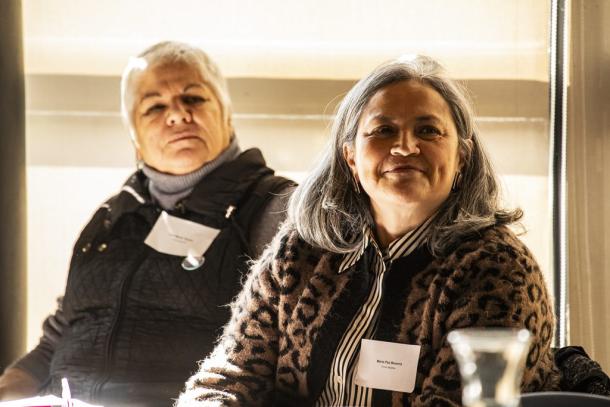
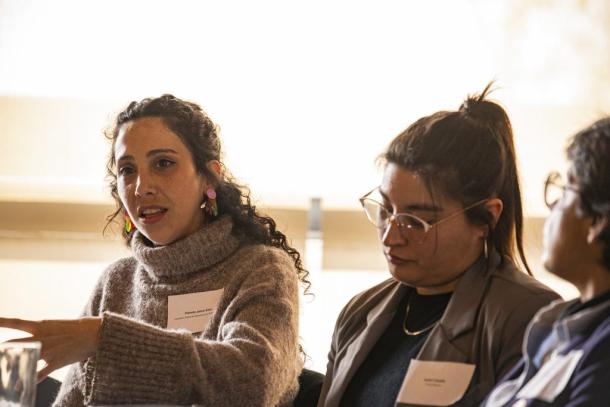
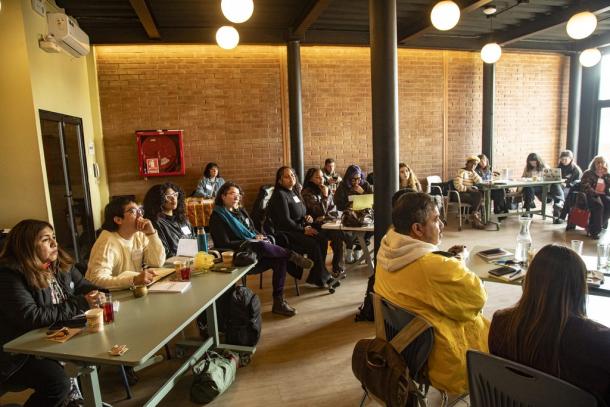
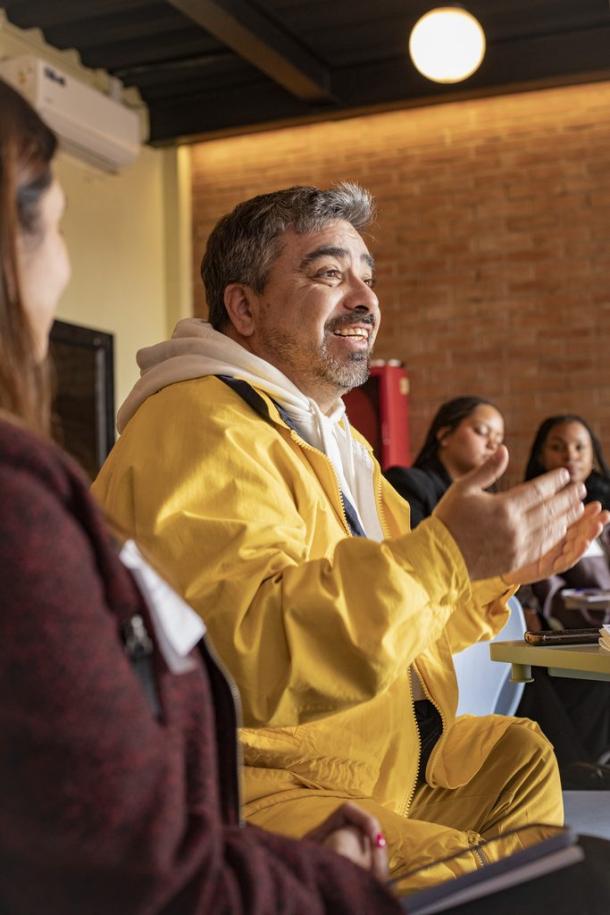
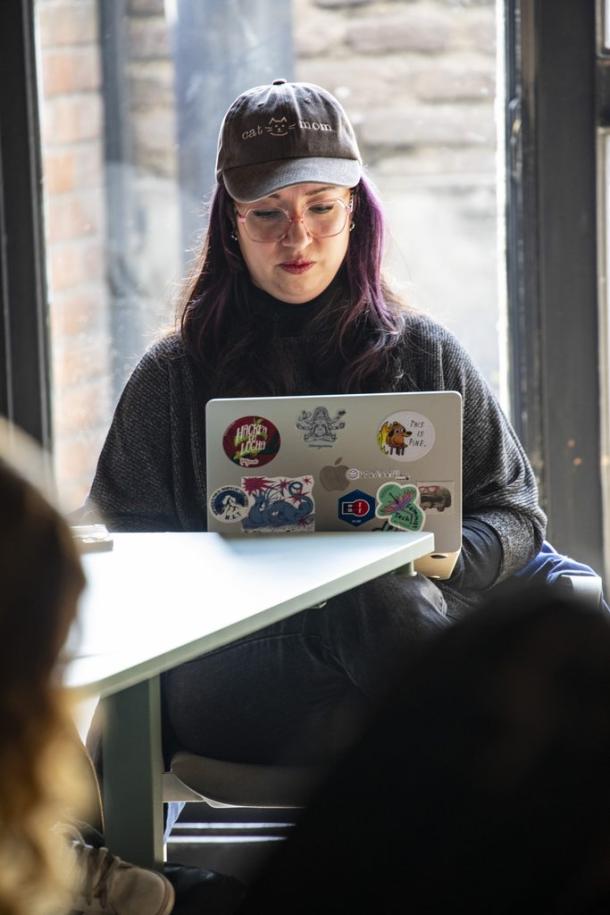
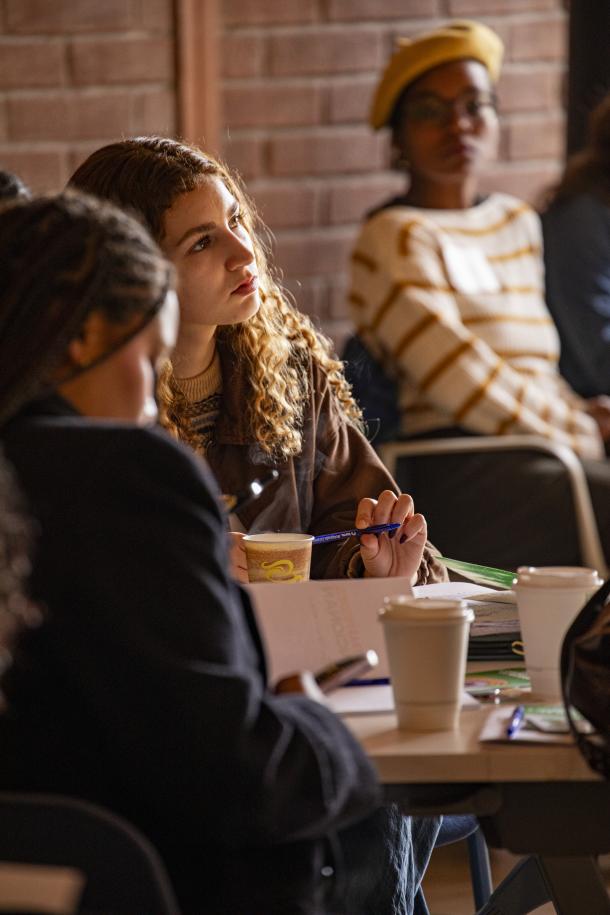
In August, on a cool winter afternoon in Santiago, Nairbis is standing before representatives of nine civil society organizations gathered in Barrio Italia. They have come together to share experiences and reflect on how digital violence affects democracy, as part of the first Defending Rights Colloquium, coordinated by Fondo Alquimia.
“We have all experienced structural violence in one way or another,” says Nairbis, who has traveled across Chile documenting the impact of hate on migrant women. Everywhere she has gone, she has found the same effect: absolute silence, complete self-censorship.
The research team she is part of has already visited Arica, Valparaíso, and the Metropolitan Region, collecting life stories from migrant women who have experienced digital violence. So far, they have found that at least half of those surveyed—more than 500 people—have experienced gender-based digital violence and/or xenophobia.

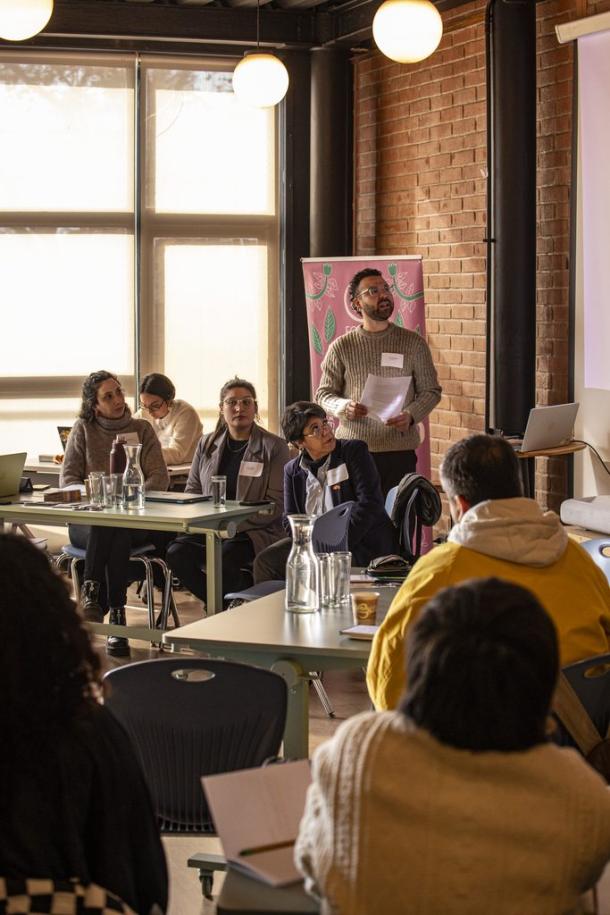
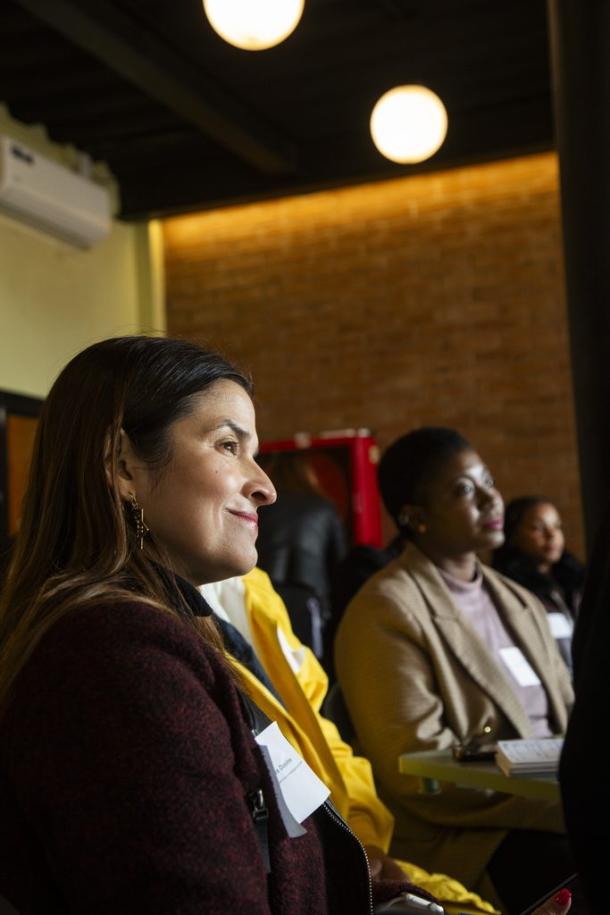
Those who took part in the colloquium know a great deal about this. They have experienced it themselves or investigated it through their organizations in recent years. They have collected data, conducted surveys, traveled to different territories, gathered testimonies, and now they are meeting away from the screen, in person, to share what they have learned.
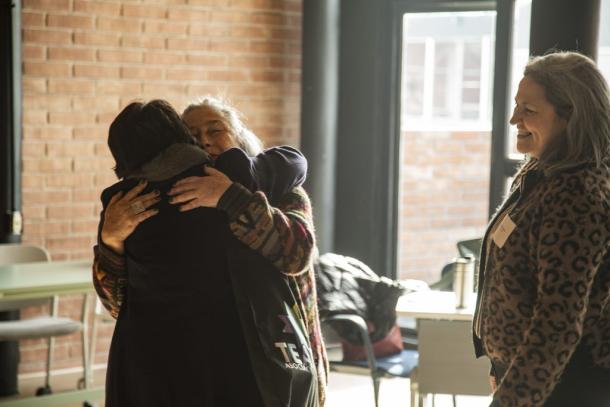
To embrace one another. To place their trust in a phrase that sometimes appears at demonstrations across Chile: “Turn off the screen and turn on your senses.”
Isabel Castillo, from Fondo Alquimia—a feminist women’s fund working for the human rights of women, girls, and people of diverse sexual orientations and gender identities—describes an undeniable duality. Social media is a powerful tool for activism and human rights advocacy: it allows people to organize, build communities, and make themselves visible. But it is also a space where violence is perpetrated, including through mechanisms that manipulate algorithms, such as bots.
Yet one of the most troubling findings of the research they conducted, Digital Violence Against Migrant Activists in Chile, is that most of the accounts responsible for the highest levels of violence and hate speech belong to real people, not bots.
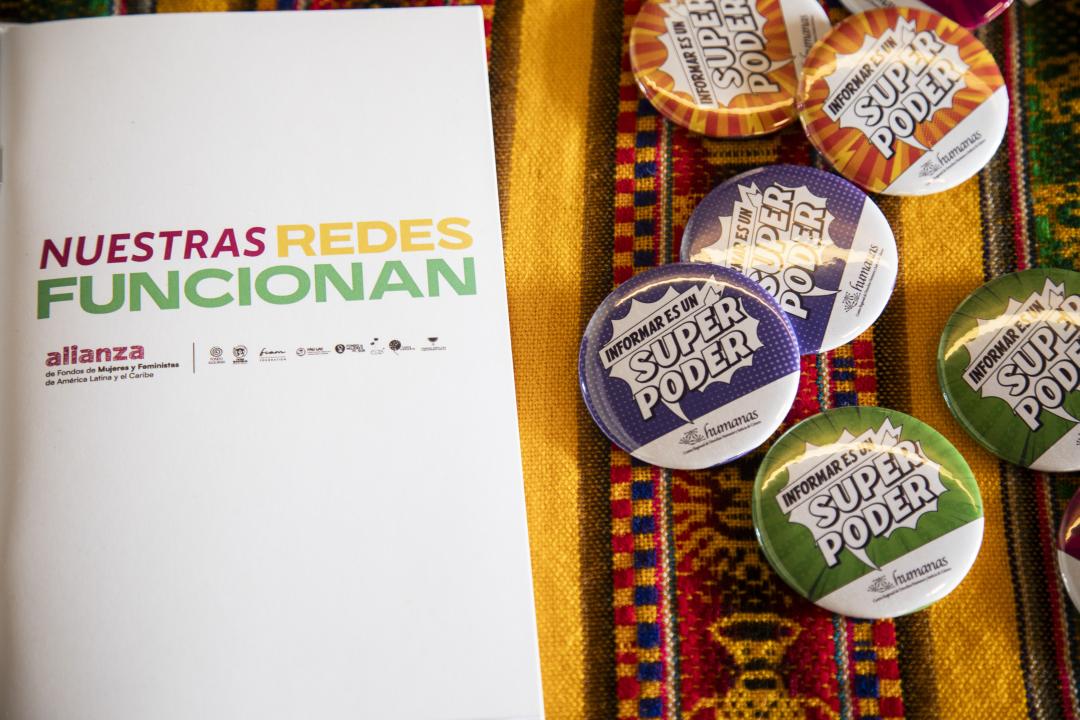
That is why, in August, Fondo Alquimia brought together a group of organizations working on digital violence as part of Our Networks Work, an initiative of the Alliance of Women’s and Feminist Funds of Latin America and the Caribbean, around one central question:
How does digital violence affect participation and democracy?
In an effort to combat hate on online platforms, the United Nations defines digital violence as “any type of communication, whether oral or written, that attacks or uses pejorative or discriminatory language against a person or group based on who they are.”
It is an increasingly significant concern, disproportionately affecting young women, girls, and people of diverse sexual orientations and gender identities. As participants emphasize throughout the day, digital violence creates distrust and stigma, causing democracy to lose diversity. And when diversity is lost, so too is our collective capacity to deliberate on matters that affect us all.
That is precisely why a gathering like this matters.
Who Gets to Speak Online?
If violence can silence someone—for example, through cyberbullying—it is worth asking how that fear takes hold. Karen Vergara, from NGO Amaranta, has devoted much of her work to tracing precisely that machinery.
According to the researcher, this kind of hate often targets the body. It can be perpetrated by current or former partners, conservative political groups, online communities and forums, family members, classmates or coworkers, parents who owe child support, religious communities, people who already abuse us offline, and groups explicitly identified as “haters.”
At NGO Amaranta, they have also observed the rise of antifeminist discourse amplified by the algorithms of major platforms.
“Algorithms like content that makes us angry. Content that generates strong emotions, and above all anger, keeps us on a post for longer, commenting and arguing,” Karen says.
To identify different forms of hate, they created a “mountain of digital violence,” something akin to an iceberg of the web, with its “visible” and “explicit forms” above the surface, and its “invisible” and “subtle forms” below it.
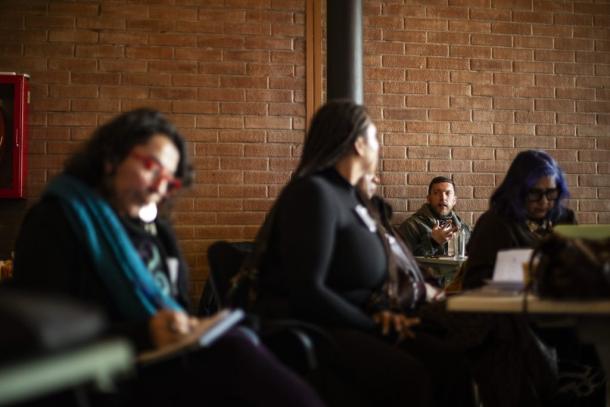
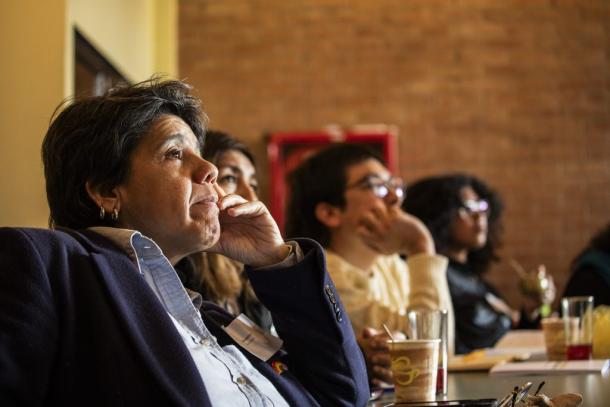
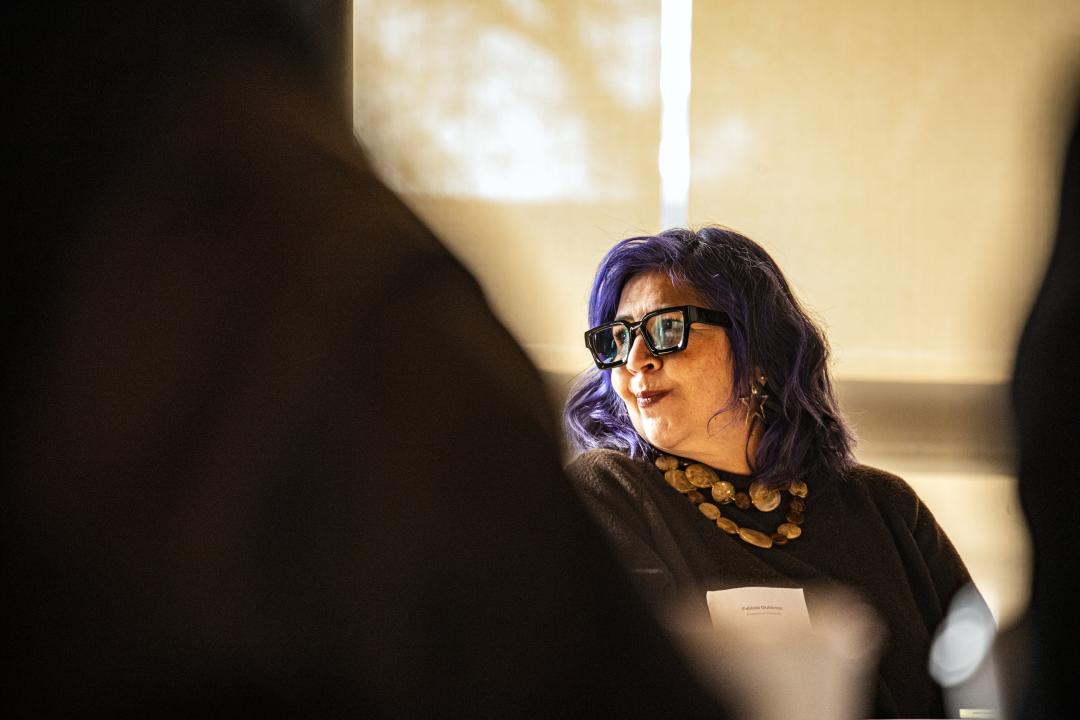
From her experience, Fabiola Gutiérrez of Corporación Humanas says: “Digital violence is an extension of the forms of violence we already knew, now amplified, accelerated, and often made invisible by technology.”
Humanas recently presented its 15th Survey on Women’s Perceptions. The survey found that 63% of respondents consider social media to be a space where women are harassed, while six out of ten users do not report violence because they are afraid.
Stories in the Flesh
The effects of digital violence are not the same for everyone. They vary depending on the body that speaks, the place from which they speak, and the conditions they were already carrying before entering a platform.
“I am a lesbian,” says Érika Montecinos of Fundación Poderes, an organization working to strengthen voices and public representation within the LGBTIQANB+ movement.
“I cannot and will not stop presenting myself as who I am,” she says.
She did the same during her campaign as a candidate for Chile’s Constitutional Convention. From the beginning, her political profile had a clear focus: queer identity. And that was precisely why she experienced digital violence.
According to Érika, attacks against social movement leaders and public spokespeople increase during electoral periods. “Especially against those who were candidates; that is what my own experience tells me,” she says.
She also highlights something that may not be immediately obvious: for some time now, sexual and gender minorities have been losing visibility in public narratives, giving up ground.
Those threats to their existence and continued presence emerge through hate speech on platforms, cyberharassment, and actions “coordinated by far-right groups aligned to target certain profiles.” The attacks do not only take the form of insults. They can also involve the exposure of personal information, known as doxing.
In Érika’s case, information about her work in public service, her salary, and her professional connections was exposed. On one occasion, one of the platforms even issued an alert against her for allegedly “harming the community.”
“Hate speech and hateful expressions emerge in times of crisis,” says David Arboleda of the Chilean Network of Migrant Journalists.
Platforms such as Meta and X, he explains, produce content designed to capture users’ attention—a phenomenon known as the attention economy. As a result, they tend to prioritize content with negative connotations about migration.
This dynamic also spills over into the press.
“Migrants are not consulted by mainstream media when these narratives are being discussed. The media asks experts, ‘What is happening with migrants?!’ But nobody asks migrants how we are doing,” he says.
From another perspective, Facundo Ríos invites people to “embrace the stigma.”
He grew up in the 1980s, in a world of homophobic slurs and stigma around HIV and AIDS, where the word “gay” was not even part of the common vocabulary.
It was precisely the accumulation of anger—and knowledge—that led him to work at Fundación Savia, an organization focused on accompanying and supporting people living with HIV or AIDS throughout diagnosis and treatment.
From there, he says, some people have begun reclaiming the insults directed at them and making them their own, adding a political identity: sidoso antifascista—“AIDS-ridden antifascist.”
Facundo teaches people to read between the lines.
“Digital violence is not only trying to change what we think, but also who we trust to help us understand the world,” he says.
Facundo stresses the importance of learning how to read the digital world. Beyond knowing how to use social media, he argues, it is necessary to inhabit it.
In the same way, Michel-Ange Joseph, from the Fundación Cónclave Investigativo de las Ciencias Jurídicas y Sociales (CIJYS), brings attention to the gaps created by the digitalization of democratic processes.
For her, digital violence cannot be limited to harassment on social media. It also exists—and persists—through technological systems and automated platforms that obstruct access to rights and restrict people’s ability to participate democratically.
Michel-Ange speaks of “the machine” to describe systems that are supposed to be intelligent but ultimately limit and marginalize groups within society.
One of the cases she has encountered involved a Haitian-Brazilian citizen who was trying to regularize his status in Chile. An automated system requested criminal records from Haiti, even though he had not lived there for years and was legally a Brazilian citizen.
He filed a complaint, explaining that he had been outside Haiti for five years and held a Brazilian passport.
The result?
The machine did not respond.
Another situation she has encountered involves machines that fail to recognize darker skin tones, consequently obstructing people’s access to legal and migration procedures.
The activist argues that the right question is not whether we use technology, but what kind of technology we use and what kind of democracy we build with it.
Because “when machines delay procedures, make people invisible, block rights, manipulate information, and interfere with public deliberation, digital violence ceases to be a technical problem and becomes a democratic one.”
The Practice of Collaboration
Faced with a phenomenon that seems designed to isolate people, the organizations gathered at this meeting are experimenting with the opposite response: working together.
For Pamela Jaime Elías of the Chilean Association for Family Protection (APROFA), we are living in a moment when it is increasingly difficult to distinguish between online and offline spaces, and where hate permeates everyday life.
Recently, she says, as extreme and conservative discourses have gained ground, even the organization itself has come under attack.
These threats and setbacks, she argues, must be confronted “through a collaborative approach and practice.” And that is the opportunity they see in the current context:
“The only way to resist hate is to keep working toward a clear goal.”
APROFA’s immediate response is to continue its work: creating safe spaces, seeking funding to reach more territories, and expanding the importance of comprehensive sexuality education (CSE).
One example is a joint investigation with Fundación Savia into inequality and barriers to accessing healthcare.
The aim is not only to transform the way people understand these issues or the image they have of people living with HIV, but also to help people identify what—and which data—they can trust when trying to understand the world, Facundo explains.
And then, among everyone gathered, Camala Marambio from Kilombo Negrocentricxs raises her hand. “I want to create an alternative television channel with all of you. Instead of chasing our own tails, why not build something alternative ourselves?”
Resisting Without Disconnecting
By the end of the afternoon, the diagnosis is clear: there is still much to be done.
The most common strategies adopted by people experiencing digital violence are reporting, flagging, and blocking those responsible for the hate. Sometimes attacks take the form of hacking, comments, or direct threats.
According to Nairbis, another strategy that may seem effective is restricting and carefully selecting audiences, keeping conversations private, and leaving platforms altogether.
While these responses can help people maintain control over their personal information, reduce risks, and protect their safety, they also constrain freedom of expression.
That is why, beyond demanding stronger and new regulatory frameworks, she calls for strengthening support networks and building shared purposes.
At Fondo Alquimia, there is agreement on the need for collective and coordinated action: turning to community and collective strength to confront these realities, while also learning about ways to protect digital accounts.
For the organization, ensuring that migrant activists have the resources they need to develop their work, collect data on the issue, and enabling NGOs and social movements to incorporate digital activism as a tool are all essential steps toward creating a safer and more democratic online space.
Fundación Poderes encourages the use of digital security protocols for individual profiles: reviewing social media privacy settings, using strong and unique passwords, enabling two-factor authentication, verifying whether applications can be trusted, and becoming aware of potential risks.
The greatest harm, they argue, comes from underestimating the danger.
Infomigra is another organization working to raise awareness about digital rights. Alexis Torreblanca points out that people often fail to understand the importance of their digital rights and, in many cases, are unaware of what those rights are.
For him, the case of Ceuta is a stark example of how misinformation can lead to mass migration, resulting in the deaths of more than one hundred people from Morocco.
“We need to understand the weight of the digital world,” he adds.
Because we must not forget that the digital world can also contribute to social change. It enables greater organization, visibility, denunciation, and even activism.
Building community is another idea that commands attention.
Patricia Loredo, from Corporación Colectivo Sin Fronteras, emphasizes the importance of sharing existing legal tools with communities so they can respond to hate. But she also calls for producing reports and demanding transparency from governments, particularly regarding migrant children.
Soy Alma de Negra, meanwhile, offers workshops on art, hair braiding, and headwraps as a way of affirming racialized identity, while bringing academia into the process to conduct comparative research on anti-racism frameworks in Colombia, Brazil, and Chile.
Looking ahead, Fondo Alquimia calls on people not to withdraw from these spaces, but to create “the internet we want”.
It also calls for shared commitments and continued funding for human rights organizations so that they can remain sustainable and, in turn, reach “as many territories as possible,” Isabel concludes.
Photographs by Jorge López Orozco | Revista Abismo